


By Violet Auma || violetmedia8@gmail.com
Addis Ababa, Ethiopia — 16 February 2026
African leaders have renewed calls for the remaining 24 Member States to ratify the African Medicines Agency (AMA) Treaty, warning that regulatory gaps leave the continent vulnerable to substandard and falsified medical products.
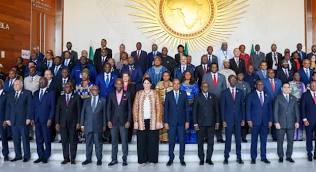
Speaking at the 39th ordinary session of the Assembly of heads of state and government of the African Union during a High-Level Presidential Breakfast convened by the African Medicines Agency on the margins of the summit in Addis Ababa, Heads of State, ministers, and AU officials underscored the urgency of universal ratification to safeguard Africa’s health security and strengthen its pharmaceutical industry.
Currently, 31 of the AU’s 55 Member States have ratified the AMA Treaty. While the agency’s headquarters is now operational in Kigali and a Director General is officially in place, leaders argue that without universal ratification, Africa risks fragmented regulation that could undermine public health and trade integration.
The AMA Treaty was adopted in February 2019 during the 32nd Ordinary Session of the AU Assembly. The agency is only the second specialized health institution of the African Union, after the Africa Centres for Disease Control and Prevention.
Leaders stressed that ratification is not merely procedural but central to continental efforts to harmonize regulation, protect patients, and promote local pharmaceutical manufacturing under the African Continental Free Trade Area (AfCFTA).
In a notable show of commitment, Seychelles Vice President H.E. Mr. Sebastien Pillay pledged USD 200,000 to the AMA — double the required USD 100,000 seed fund contribution for state parties — and challenged larger nations to match the gesture.
The financial pledge was framed as a signal that smaller states are ready to invest in collective health sovereignty.
Tunisia’s Minister of Health, Dr. Mustapha Ferjani, emphasized the link between regulation and independence.
“Today, a single truth imposes itself: Africa’s health sovereignty depends on regulatory sovereignty,” he said.
In a direct appeal to member states yet to ratify, he added:
“Let us all ratify, and equip AMA with the capacity to act with resources, skills, clear procedures, and effective governance. Our people deserve it, our health security demands it, and our sovereignty depends on it.”
AMA Director General H.E. Dr. Delese Mimi Darko outlined the agency’s ambition to achieve universal ratification, secure WHO Listed Authority status, and become financially self-reliant by 2030.
She noted that significant progress has been made since adoption of the treaty.
“Over the past five years, we have moved from a Treaty on paper to a living institution,” she said.
According to Dr. Darko, the AMA is already working with ratifying member states to strengthen regulatory systems, streamline joint assessments, and promote reliance on shared expertise.
In her closing remarks, AU Commissioner for Health, Humanitarian Affairs and Social Development, H.E. Amb. Amma Twum-Amoah, positioned the AMA as integral to the African Union’s broader development framework, including Agenda 2063 and the African Health Strategy 2030.
She described the agency as:
“A shared continental asset integral to delivering on the African Health Strategy 2030 and Agenda 2063, and the commitments our Member States have made to protect the health and wellbeing of their people.”
The Commissioner expressed confidence that universal ratification, full implementation, and sustainable financing of the AMA could be achieved within the current political cycle.
The African Medicines Agency is designed to enhance the capacity of State Parties and AU-recognised Regional Economic Communities to regulate medical products. It builds on the African Medicines Regulatory Harmonization (AMRH) initiative launched in 2009 under the leadership of the African Union Development Agency (AUDA-NEPAD).
A unified regulatory framework is expected to improve access to quality, safe and efficacious medical product, reduce the circulation of falsified and substandard medicines, strengthen pandemic preparedness and health security and support local pharmaceutical manufacturing and intra-African trade
As the 39th AU Assembly concludes, leaders framed the summit as a defining moment for Africa’s regulatory future urging the remaining 24 states to ratify the treaty and close regulatory gaps that threaten public health across the continent.
With the headquarters operational in Kigali and political momentum building, the push for universal ratification now becomes the decisive next step in building a safer, more resilient African medicines system.